
Proprietary
SPT95 technology
Supra Perfecta Technologies Limited describes SPT95 as its proprietary hypochlorous technology, made in the United Kingdom.[5]
Learn moreThe EQ8 range
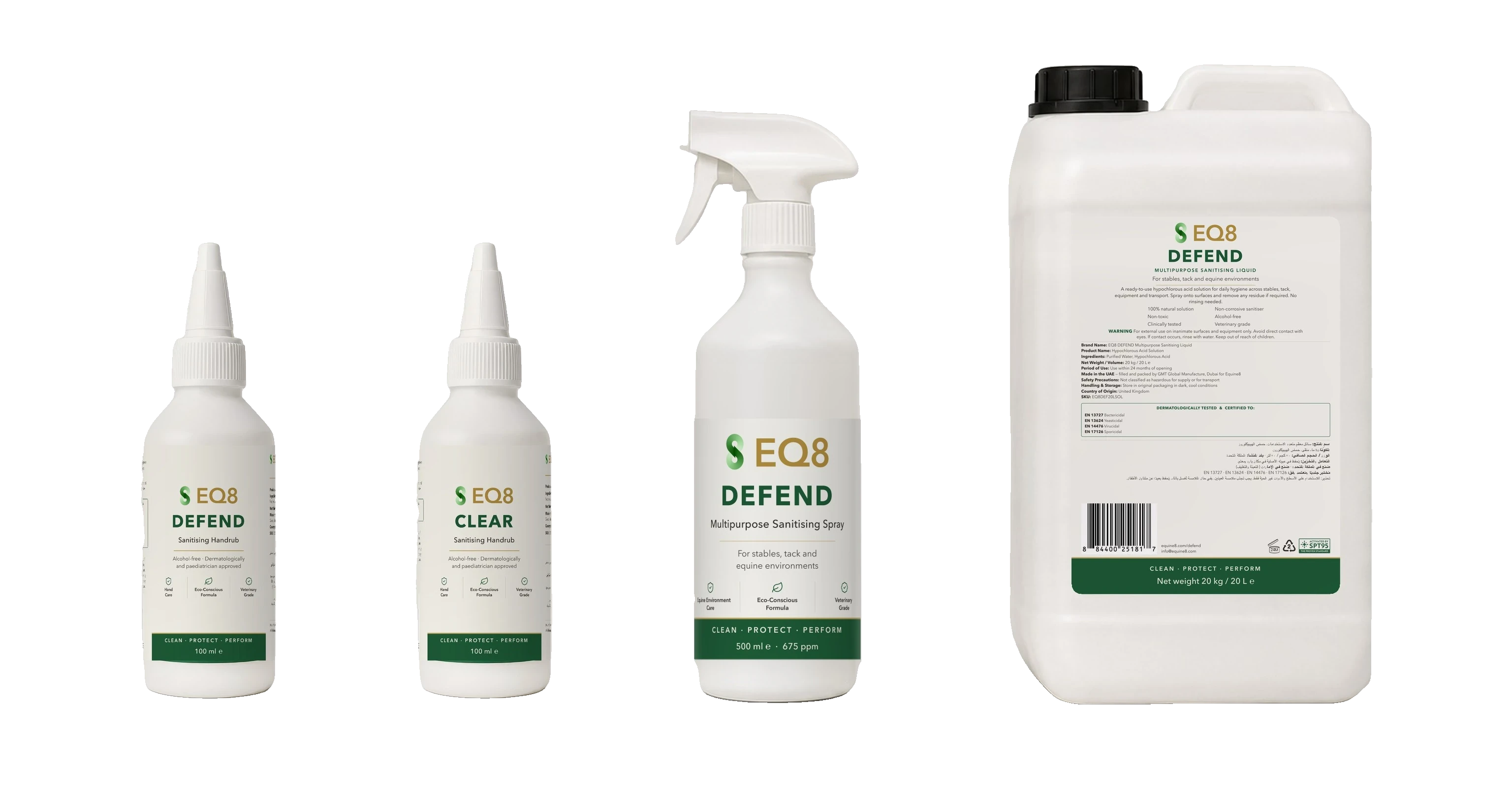
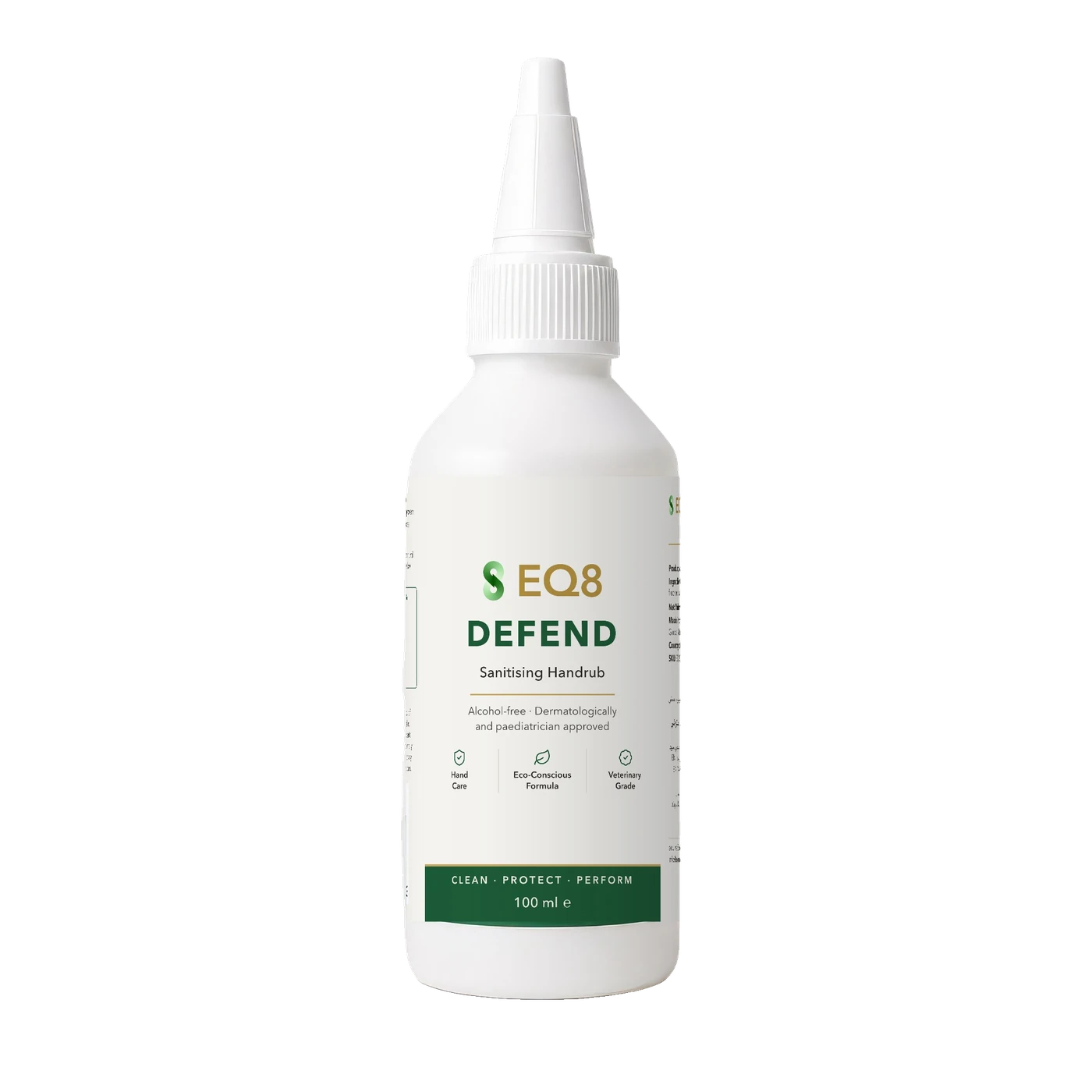
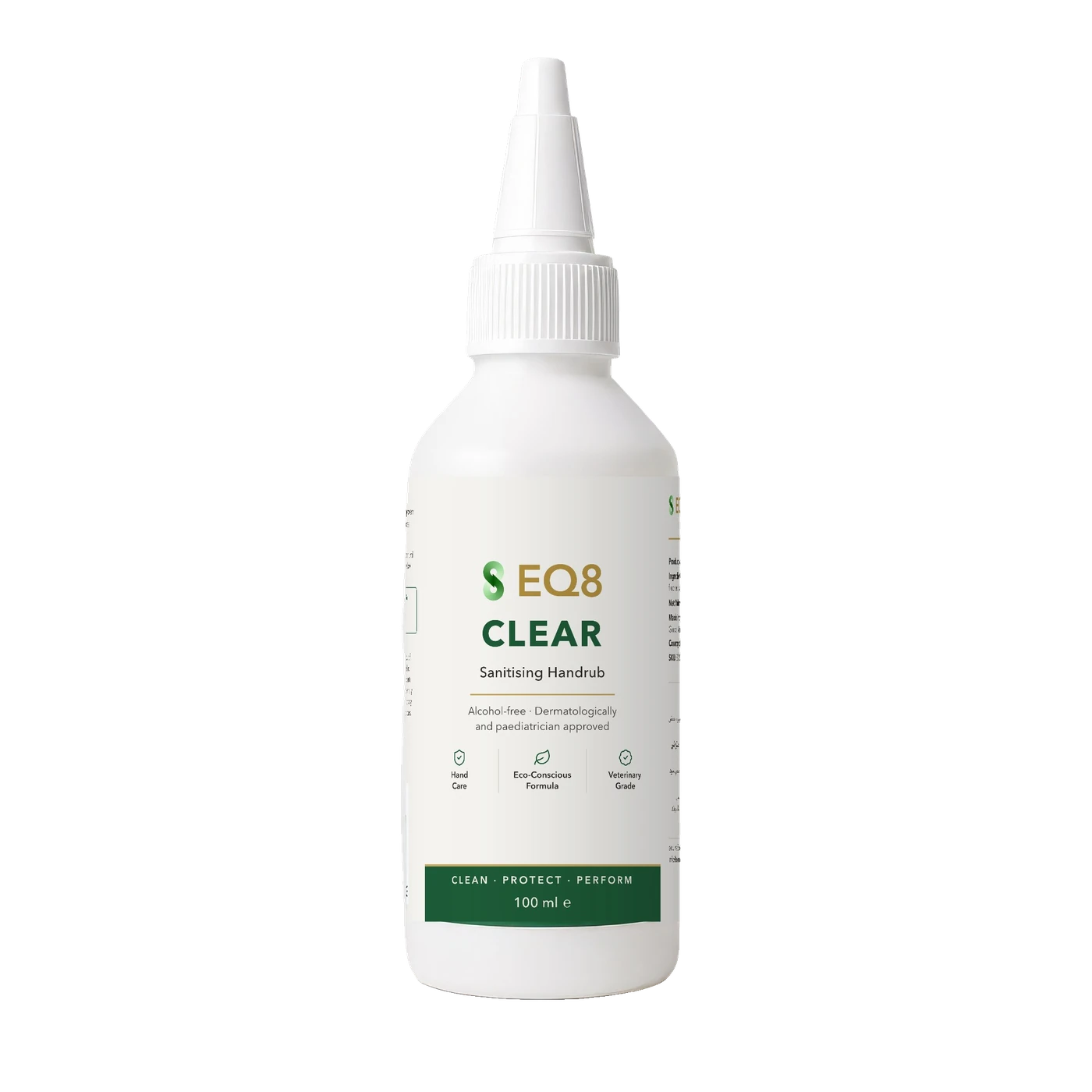
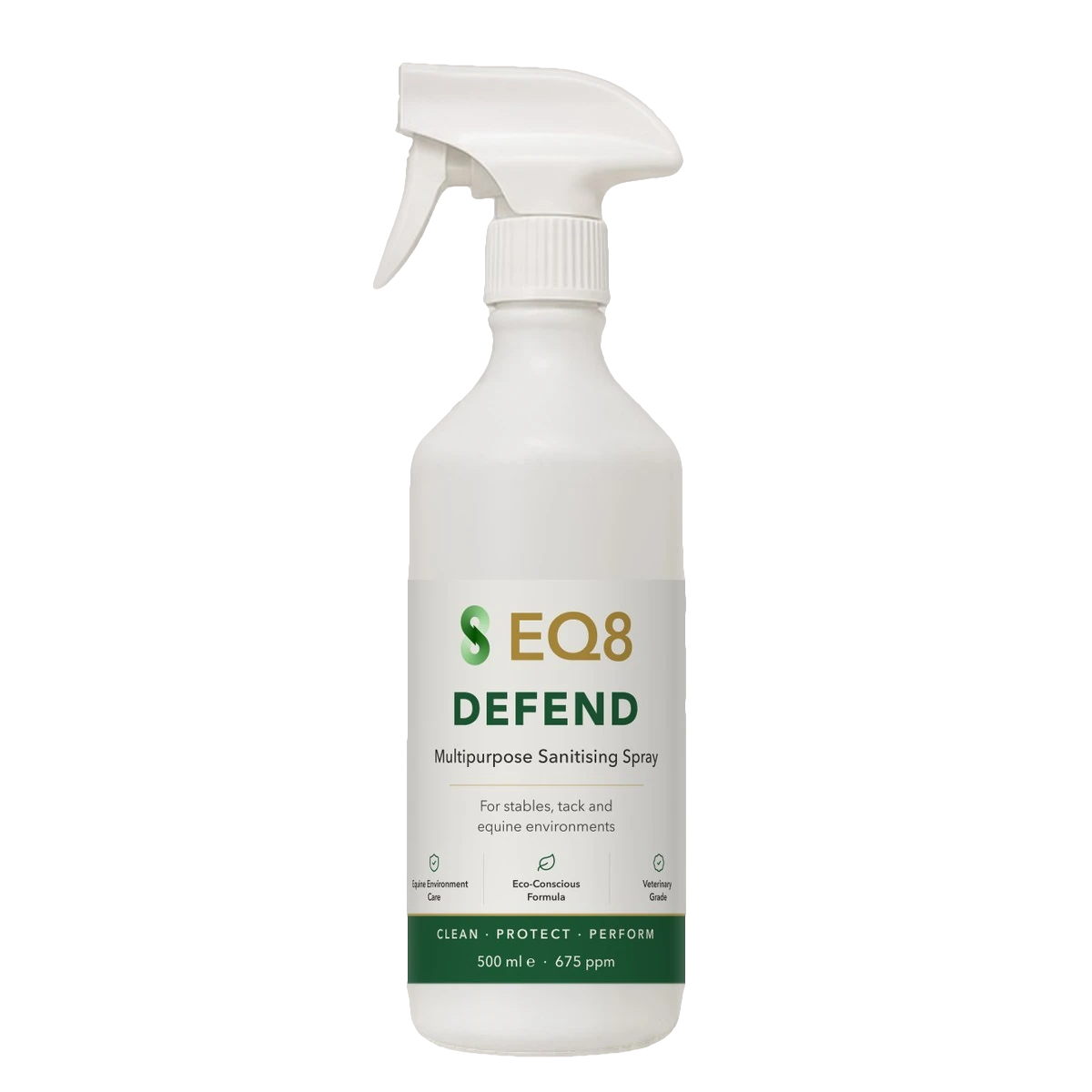
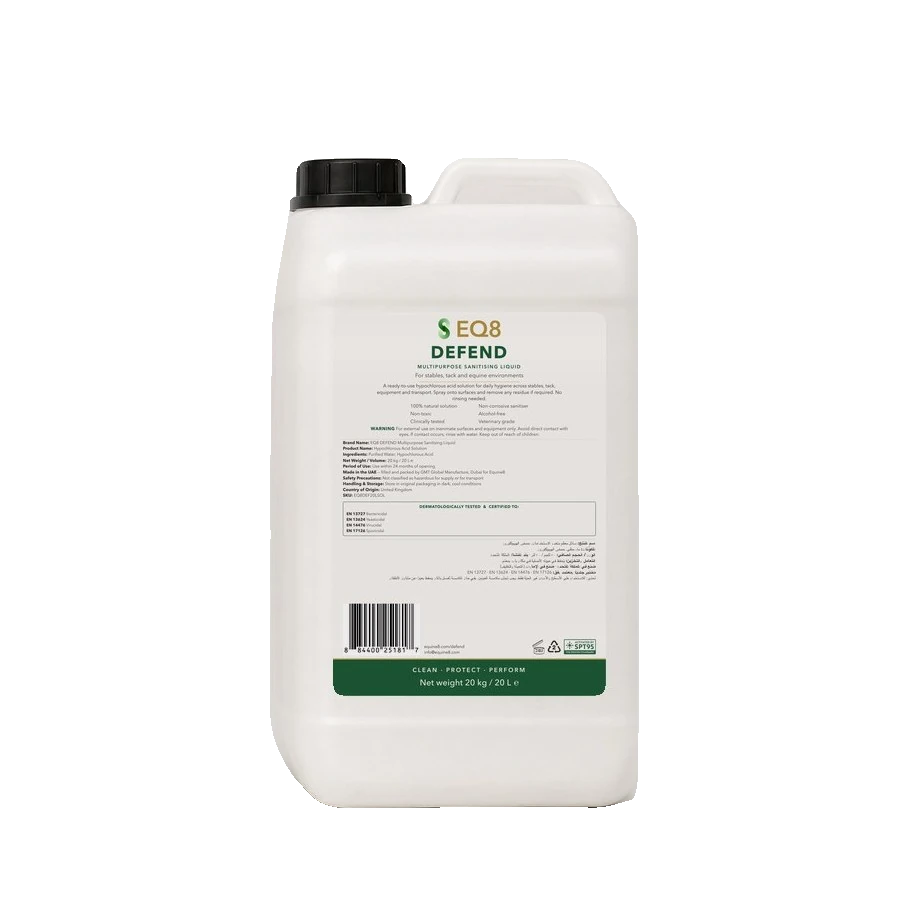
Four products from Equine8, from a 100 ml handrub to a 20 L drum for the yard.[1–4]
9
EN standards across the EQ8 range: six on the labels, and three more on Supra Perfecta’s data sheets for the spray and liquid.[1–4][15]
675ppm
Strength of EQ8 CLEAR Sanitising Handrub and EQ8 DEFEND Multipurpose Sanitising Spray. The DEFEND handrub is 1000 ppm and the liquid 2000 ppm.[3][15]
>95%
Of the free available chlorine in SPT95 is present as HOCl, according to Supra Perfecta.[5]
24months
Use within 24 months of opening, across the range.[1–4]
From the evidence library
Four in-depth guides, each fully referenced. They summarise published research; where a guide gives a result for an EQ8 product, it comes from that product’s label and certificates.
Hand hygiene
Hypochlorous and alcohol hand rubs side by side: how they compare on hands, spores and skin, how to use them, and EQ8 DEFEND’s EN 1500 result.
2 charts · 2 tables · 17 references
Hypochlorous removed more spores than soap; alcohol barely touched them
HypochlorousAlcohol or soap
Log reduction of C. difficile spores on hands (higher is better)
Mechanism
How hypochlorous reacts within milliseconds with the sulphur-containing parts of a microbe’s proteins and shuts down its energy supply, transport and DNA copying, and why the body makes the same molecule to fight infection.
Interactive cross-section · 20 references
Reaction speed with the sulphur-containing parts of proteins
Rate constant, per molar per second, pH 7.4
Stable hygiene
Where hazards live in a stable and how long they last, interactive stable zones, and a clean-first routine built on a 2023 study of stable cleaning, with where hypochlorous fits.
Interactive stable zones · 6 charts · 51 references
After cleaning, only the polyester halter stayed positive (6 of 8)
UntreatedCleaned and disinfected
Samples still positive (out of 8)
Strangles
How strangles spreads, the signs, silent carriers, testing, treatment, vaccination and biosecurity, drawn from the veterinary consensus and the latest research.
6 charts · 4 tables · 34 references
A horse can spread strangles for weeks after it looks better
Acute illnessHidden risk
Days after exposure (approximate)
Find by use
Choose a job around the yard to see the product for it.
Apply to visibly clean hands and allow to dry.[1][2]
DEFEND Sanitising Handrub CLEAR Sanitising HandrubStandards
Which EN standards each EQ8 product is certified to, what each laboratory test measures, and the certificate or test report behind it, in one matrix you can filter by product or test type.
Interactive matrix · 6 standards · 4 products
15 label claims across 6 EN standards, and 3 more tests on the data sheets
Certified, on the labelAlso tested, according to Supra Perfecta’s data sheet
| Standard | DEFEND Handrub | CLEAR Handrub | DEFEND Spray | DEFEND Liquid |
|---|---|---|---|---|
| EN 1500Handrub, bactericidal | ||||
| EN 17430Handrub, virucidal | ||||
| EN 13727Bactericidal | ||||
| EN 13624Yeasticidal | ||||
| EN 14476Virucidal | ||||
| EN 17126Sporicidal | ||||
| EN 1276Bactericidal, food areas | ||||
| EN 16777Virucidal | ||||
| EN 17387Bactericidal, yeasticidal, fungicidal |
CLEAN · PROTECT · PERFORM
Hand and surface hygiene from Equine8, activated by SPT95.[5]
The science
White blood cells called neutrophils make hypochlorous to destroy microbes they have engulfed.[6][7]
pH decides which form it takes. Below about pH 7.5 it is mostly uncharged HOCl, the form that does the germicidal work. Above it, it becomes the charged hypochlorite ion, which matters more for cleaning action.[9][10] Move the slider to see the balance shift.
How hypochlorous worksIllustrative chemistry
pH 7.0
77%
of the free chlorine is uncharged HOCl at pH 7.0
Calculated as 1 / (1 + 10(pH − 7.53)). Illustrative only; not a statement of any product's pH.
The evidence
Proprietary
Supra Perfecta Technologies Limited describes SPT95 as its proprietary hypochlorous technology, made in the United Kingdom.[5]
Learn moreUKAS
Supra Perfecta’s data sheets state that independent testing by a UKAS-accredited laboratory demonstrated compliance with the EN standards they list.[15]
See the matrix50%
The WHO reports that hand hygiene programmes can prevent up to 50% of avoidable infections acquired during health care.[8]
Read the evidence